
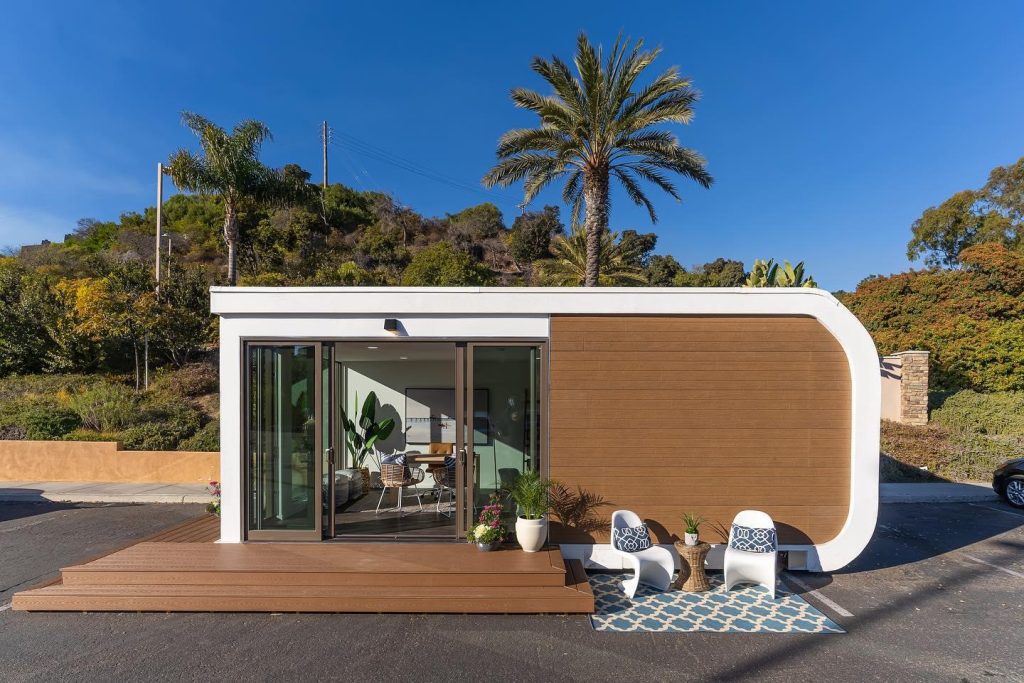
In recent years, the housing landscape in California has evolved significantly with the introduction of Accessory Dwelling Units (ADUs). Among the methods to construct these units, prefabricated (Prefab) ADUs and traditional construction methods are the most prominent. This blog explores these two approaches, focusing on key aspects such as cost, time, sustainability, and flexibility.
Cost
Prefab ADUs are often perceived as more cost-effective compared to traditional construction. This cost efficiency comes from the factory setting where these units are built. Bulk material purchase and controlled construction environments reduce waste and unexpected expenses, which are common in onsite builds. Traditional construction, however, involves variable costs that can escalate due to factors like weather delays and labor shortages.
Time
Time efficiency is another critical factor. Prefab ADUs are built in a controlled factory environment, which allows for simultaneous site work and building construction. This parallel process can cut down the overall project time significantly. In contrast, traditional construction is sequential, meaning foundation work must be completed before the structure can rise, subject to delays from external factors.
Sustainability
Sustainability is increasingly important in construction. Prefab units benefit from the factory setting where precision and recycling practices can be better managed. This results in less material waste and a smaller environmental footprint. Traditional construction methods, while improving, still struggle with significant on-site waste and energy consumption.
Flexibility
Flexibility in design is where traditional construction has an advantage. Customization options are nearly limitless as each element can be tailored on-site. Prefab ADUs, while offering a range of designs and finishes, are limited to what can be transported and assembled from the factory, restricting changes that can be made after the design phase.
Compliance with Local Regulations
Both construction methods must adhere to local building codes and regulations. However, prefab units are pre-approved designs which streamline the permitting process. Traditional construction is subject to inspections at various phases, which can extend timelines and complicate compliance.
Integration with Existing Structures
Integrating a new structure with existing buildings poses different challenges for each method. Prefab ADUs can be designed to complement an existing home, but the options are limited by predefined modules. Traditional methods allow for more organic integration, tailoring the new structure to the specific nuances of the existing property.
Long-Term Value
Regarding long-term value, both methods offer durable solutions. However, the perception that prefab constructions are less durable can affect property value, despite advances in technology that rival traditional methods in longevity and performance.
Choosing between a prefab ADU and traditional construction depends on individual priorities like budget, timeline, sustainability, and design flexibility. Each has its merits and limitations.
About Mana Construction Inc.
Mana Construction Inc., a seasoned real estate builder and construction company in California, specializes in both prefab ADUs and traditional construction methods. Our team provides expert guidance from the initial design to the final build, ensuring that your project aligns with your vision and meets all local regulatory standards. Whether you seek the efficiency of a prefab unit or the customization potential of traditional construction, Mana Construction Inc. delivers quality and satisfaction.
For more information on how we can help you with your next construction project, contact us directly.